I was about to eat my lunch with some of the other volunteers and elderly participants at the Howick Community center when I realized I hadn’t checked my phone in 3 hours. My mom brain thought- Oh my phone, someone might need me. Mom or not, maybe we all have that attachment to our phones. And then I saw the dreaded notification that I missed a call from the school. I listened to the message- “Hi Angela (in NZ they tend to use first names), it’s Anna from Maraetai Beach School. Hey, I’ve just got Maria in the health room. She’s just had a bit of a fall at morning tea time. Ummm, she got off the playground and now she’s saying she’s really not feeling very well and is a bit sick in the tummy. Just wanted to see if you were around to come get her…” I called the school and talked to Maria. She didn’t sound too bad but complained her shoulder hurt. My mind now elsewhere and wondering, I tried not to jump to any conclusions as I finished my lunch and drove the 25min there.
When I saw her, I had a feeling that she might have broken her collarbone, the way her arm was hanging and her reluctance to use it although there wasn’t an obvious lump or deformity. She seemed a bit out of sorts but thankfully not hurting too much. I figured I needed the closest urgent care with x-ray capabilities but then I had no idea where to take her and what I needed to have with me. I called all the local moms I could, but no one answered. Danny helped me locate our travel insurance info. Thankfully I didn’t need to rely on google as a friend called back and told me where to go. I made sure Maria had food and her electronic tablet, knowing the wait may be long. I then headed the 25 minutes back in the direction I had just come from. Maraetai where we live is a lovely place although not super close to things like medical centers. I wish that all my medical training would help me think clearly in situations like these, but often my anxiety gets the best of me. When I arrived at the clinic, I realized I had left my wallet at home. No money or ID. Oooph! How stupid could I be! What was I to do? Drive back to Maraetai? No, that would take me an hour. I decided I would plead my case to whomever and hope for the best.
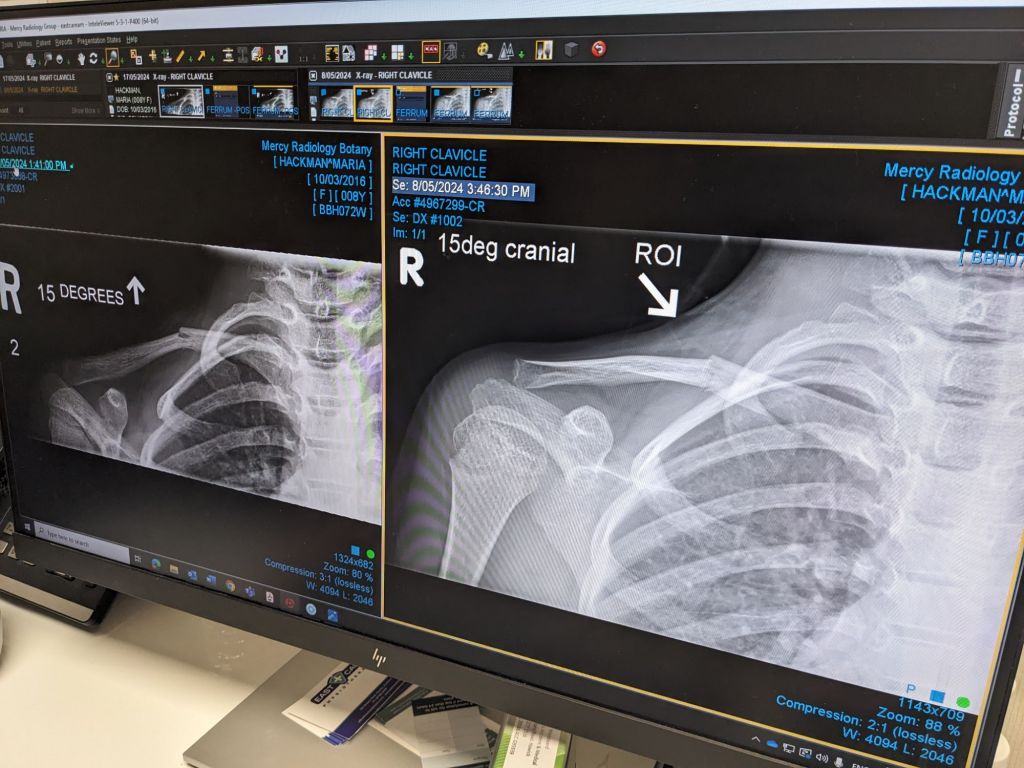
The clinic seemed like your typical urgent care, a small waiting room (thankfully not too crowded) and a counter with a few people behind fiberglass panels. I presented Maria to the first window, the triage window, for a quick history and exam. I made sure to tell them I didn’t have my wallet. The guy did not seem bothered by that fact. So far so good. I filled out a few lines on a sheet of paper with the basics (names, birthdate, address, phone number); also there was a place to list us as temporary residents. I give these rather mundane details to point out that that was practically all the paperwork I had to fill out. Like it took 2 minutes and did not require any info that wasn’t in my head, nor did I need to sign my life away on multiple legal documents. We were given a triage number- 5, probably due to the lack of large deformity or significant pain and so we waited nearly 2 hours. But after we were seen by a provider, we were moved along at a reasonable pace through Xray, back to provider (yep it’s a broken collarbone), to treatment room (given a sling), and lastly at the pharmacy next door to get Panadol (aka tylenol) and ibuprofen. I was asked to pay $40 NZD for the x-ray but when I explained I didn’t have my wallet, an invoice was printed for me to pay later. The pharmacist wasn’t sure whether I should pay for the medication, but when I told them I had no money on me, they gave it to me for free. I didn’t know this at the time, but all the medical care was covered under New Zealand’s ACC. ACC (Accident Compensation Corporation) covers care associated with accidents in NZ, even for visitors. I was given an appointment 10 days later for Maria to see a doctor in their fracture clinic. We attended that appointment last Friday at the same place (the fracture clinic interestingly is located within the urgent care). It was a quick appointment with a nice doctor. She has to wear the sling for 4 weeks total and we will see the doctor one more time at the end of the 4 weeks. All in all, the process was pretty seamless, even without my wallet! I didn’t even need the travel medical insurance. And would you believe that medical care could be carried out without gobs of paperwork!
Luckily, that has been my only encounter with the healthcare system since we’ve been here. Danny I’m sure has a more personal and in depth view given his job within it. One thing he discovered early on is that providers have the final say in a patient’s code status. As you may know, in the US, the patient or surrogate if needed, has the authority to determine whether to be resuscitated. Often in the US I feel patients base their decisions on their feelings or beliefs and don’t really take into account the providers opinion. This doesn’t really come up in psychiatry (his profession) so not sure how it plays out here, but it is a difference that I imagine has wide implications. Another difference that made me ponder is that patient assisted suicide is legal here for those with a terminal illness. I learned this while talking to someone in the social art group I attend. She described her very, frail, debilitated aunt who decided she was ready to leave this world. I admit I don’t have all the details but… according to what I heard, her aunt was quite depressed about the state of her life and felt she was ready to die. Once she made the decision and it was approved so to speak, she seemed happy again, like a weight had been lifted from her. She spent a month enjoying visits from family and friends and then died peacefully surrounded by loved ones. Hearing this reminded me of an elderly lady I cared for years ago in a rehab facility. This resident had recently had a stroke and depended on a feeding tube for she could no longer swallow. She was rather down about her condition and told me she did not want to live anymore, requesting that the feeding tube be removed so that she could die. When is someone’s desire to die due to pathologic depression? Is it normal to be ready and willing to die in the last leg of life? Or is this at least partly the result of society’s message to elderly that they are worthless? Hmmmm.
Although not directly healthcare related, Danny has mentioned more than once to me that the police here act differently. He will often be accompanied by police as he attempts to visit with people in their homes who are perhaps psychotic or under the influence of drugs or have a history of violence. Sometimes he has to recommend that they be hospitalized for their own safety despite their unwillingness to cooperate. He has been taken aback by how calm and patient the police remain and their reluctance to use force. Instead, they take their time and try to get them to come voluntarily if at all possible. Based on his experiences back home, he assumed the police would jump in and place the person in handcuffs to force compliance, but they do not. If this difference is true, then what makes one more forceful than the other? Are the police in Louisville used to more violence? And then last weekend we saw in the news the police encounter with top ranked golfer Scottie Scheffler at the PGA tour in Louisville. From what I could gather, in a moment of confusion and miscommunication, the well-intended Scheffler was trying to get through a police barricade when an officer tried to stop him. When Scheffler didn’t stop, the officer jumped on top of Scheffler’s car and was dragged. Scheffler was arrested and faces charges including assault. Is this a case in point?
While New Zealand does seem to be a peaceful place, it can’t claim to be entirely gentle given it’s love for rugby. Off the main road, on the way into Maraetai is a community center, Te Puru. We’ve gotten to know Te Puru- not only do we pass it everyday, but we know it from all the activities we’ve done- parkour, basketball, cross country, and CrossFit classes. And the field is often used for rugby play from wee little ones to adults. Several weeks ago, an adult league was playing down there when one of the players, a 33yo father of three, suffered a head injury during a knee to the head tackle and despite all efforts, tragically died hours later. I did not know him, but it saddened the entire community. In this small country, it was national news. I am not used to reading news that simply conveys a tragedy and doesn’t have another agenda or isn’t a platform to discuss other issues. This news remained a tragedy, with condolences and support for the family. Danny and I feel that Kiwis seem less inclined to complain or assign blame. But maybe that is a presumptuous claim.
While our experience with the mainly public funded healthcare system was good and Kiwis don’t seem to complain a lot, I have heard some negatives here and there. One group was discussing lengthy EMS response times, telling of an acquaintance who waited over 8 hours for an ambulance after a fall. Another group of elderly persons was discussing how they were led to get private insurance when they were younger but now they are without it because private insurance is too expensive at their age, an age when healthcare services are more vital.
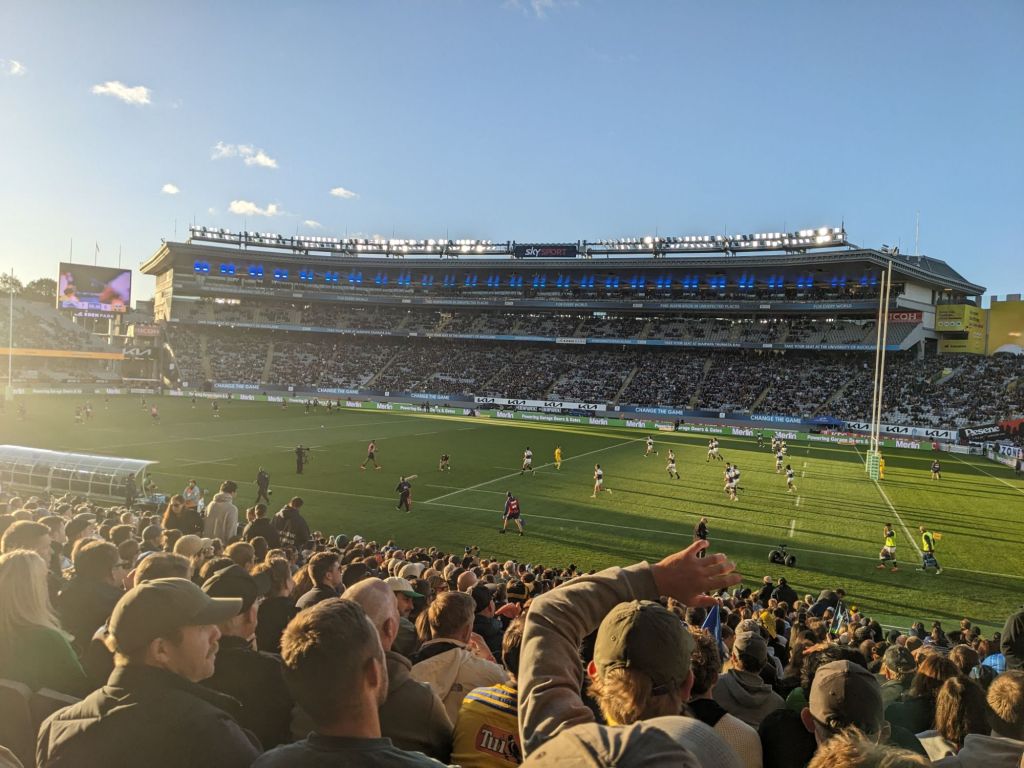
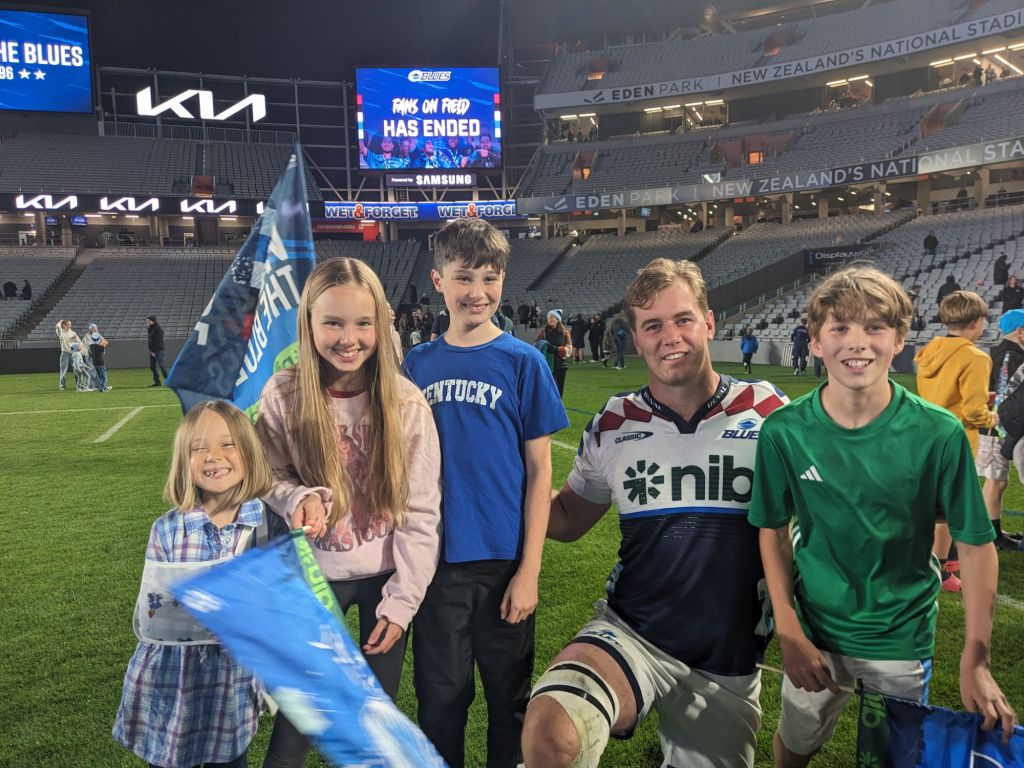
Back to rugby. Watching a professional rugby game has been on my to-do list. We were fortunate enough with the help and accompaniment of some new friends, to attend a local rugby game- The Auckland Blues vs the Wellington Hurricanes at Eden Park stadium. Of course we were quite clueless, but it was a fun night. I find it interesting that in rugby you score by actually touching the ball down in the endzone which is called a “try”. But in American football you don’t have to touch the ball down in the endzone and it is called a “touchdown”. How ironic. But I can’t claim to be entirely new to rugby. I actually played a bit of club rugby at East Carolina University during my undergraduate years. If you google “Angela Baldini ECU Rugby” (my maiden name) you may just find an article from a game played in 2002 in which I scored a try. And as you might surmise from the article or maybe from the fact a 5’2″ 100lb petite girl was accepted onto the team, we were pretty “rubbish” but it was nevertheless fun!





 American Kiwi
Leave a reply to Angela Hackman Cancel reply